
Friday Roundup: Confusion Abounds In Digital Warfare
It’s becoming increasingly difficult to parse the truth between countries trying to control a war narrative

Fourteen years ago this week, Chief Keef released Back From The Dead, a seminal project featuring his single “I Don’t Like,” which catalyzed drill music’s worldwide proliferation. The mixtape title was a reference to a rumor that a cop had fatally shot Keef, an all-too-possible fate for a young Black person. The digital rumor mill has intensified since; even something as sensitive and final as death gets the conjectural treatment on social media. And no one’s exempt: one of the most important geopolitical moments of the century is being swayed by what the “streets sayin.”
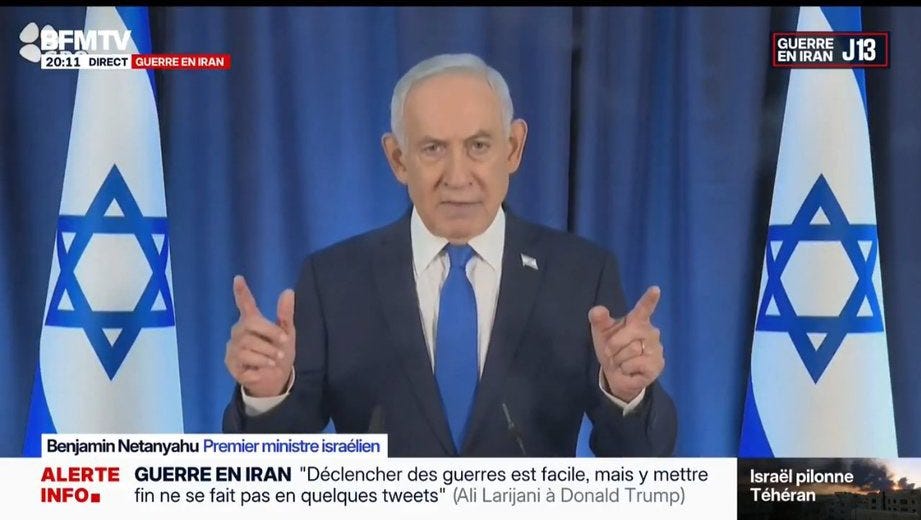
People online are theorizing that Israeli Prime Minister Benjamin Netanyahu was recently killed in an Iranian missile blast in Tel Aviv, which allegedly also took the life of Mossad Director David Barnea. There are also other rumors that he’s alive, but in a coma at Sheba Medical Center in Israel.
People are combing through context clues to strengthen their theory: Neither Netanyahu nor Gvir has been seen in days. Netanyahu’s normally active jet has been parked during that period. Everyone is picking through an AI-generated clip of Netanyahu making a statement, in which he “has” six fingers at one point. And others are making a big deal out of Israeli Treasury Secretary Scott Bessant leaving an interview to take a call from Trump, then coming back visibly shaken.
This follows skepticism on the fate of Iran’s new supreme leader, Mojtaba Khamenei, who London outlet LBC reported was “seriously injured” from an Israeli airstrike. He released a written statement, but there has been no audio or video since the alleged airstrike. And there are even Twitter accounts claiming “Iranian state media” is reporting that Mansoureh Khojasteh Bagherzadeh, his mother, and the wife of the late Ayatollah Ali Khamenei, is alive despite reports of her succumbing to the airstrike that took her husband’s life. Who knows what to believe?
Nowadays, geopolitical conflict means digital warfare between countries vying to control the narrative, and it’s become increasingly difficult to parse the truth. The concentration of propaganda, coupled with the American mainstream media’s refusal to be honest about foreign policy, means the truth could take a while to be confirmed or denied. AI videos and written statements stoke doubt. It all feels scary in a conflict with worldwide implications. If we don’t actually know how “well” US forces are faring in the region, and whether the person spearheading the imperialistic assault is even alive, what else could we end up learning about too late?
This information breaking via social media would give independent media accounts posting about the war more credibility, which isn’t necessarily a good thing. There’s a difference between genuine independent journalism and Twitter’s random “news” accounts pretending to be media outlets. They often post scandalous all-caps headlines without further context or verification. And there are so many of these accounts that they’re becoming indiscernible from credible news sources. They thrive in today’s anxious moment, where people who forgot, or don’t know, the tenets of a reliable report spread salacious conjecture like wildfire. And there’s no accountability for outright lying. Misinformation abounds, generative AI is getting even more deceiving, and readers are not judicious about what they choose to share. What are the lasting consequences of all this? What does truth mean when the key countries involved could all be lying about the course of a war that started on falsehoods in the first place?
Anyway, this isn’t an overt politics newsletter, so I’m not going to belabor this. I just thought I’d use a free post to write about something that’s been on my mind more than a bunch of middle-aged rappers dissing each other. The truth is, we don’t know what’s going on, and that’s unsettling.
More Thoughts
I was originally going to write long about this: This week, Metro-Boomin dropped a video for “They Wanna Have Fun” with Gucci Mane, Travis Porter, and Young Dro. The song is from A Futuristic Summa, an album that dropped last August. Then Nas dropped Feature Presentation 2025, a compilation of his features for last year’s Legend Has It… series, with a little commentary about each artist. A couple of weeks ago, Wale dropped a video for “Watching Us,” from everything is alot, an album that was released last November — that last one isn’t that old, but it fits my overall point: I’m all for artists keeping the party going and not feeling compelled to let an album cycle go after the first wave of buzz is over. A couple of years ago, I wrote about artists creating album franchises (album series’ or albums released in multiple parts) to stick in the zeitgeist. This is another example of that dynamic at play. Don’t let the public move on from an album or moment if you’re not ready.